Colored Concrete in Jacksonville, FL
Concrete color comes from three distinct methods: integral pigment, color hardener, and surface stain. Which one you choose affects cost, durability, and appearance in ways that matter significantly in Florida's UV and humidity. FL Certified Building Contractor CBC1269043.
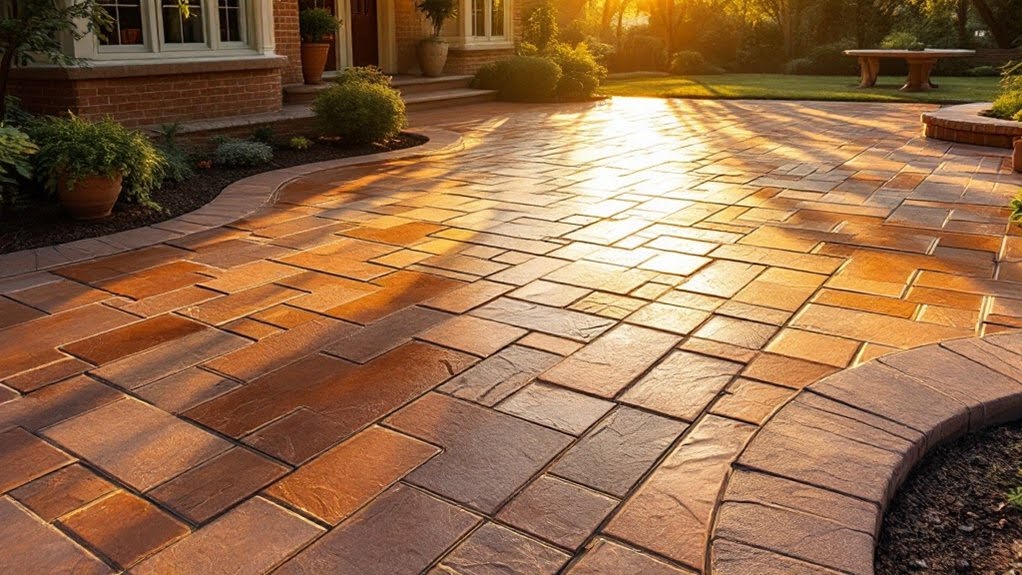
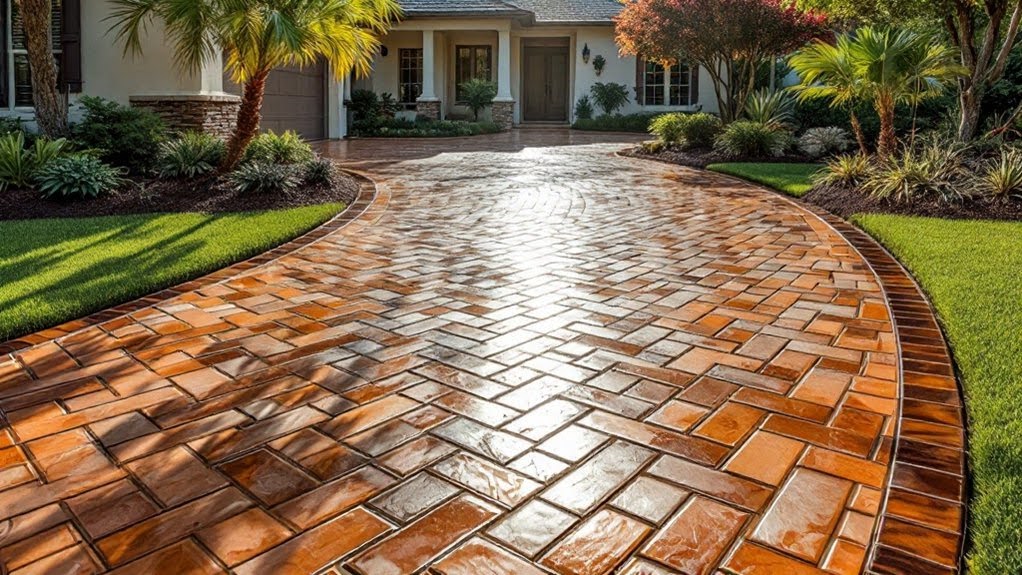
Recent Colored Concrete Projects in Jacksonville
4.6 out of 5 — 41 Google Reviews
“The quality of the workmanship really stands out: the concrete surface is smooth, level, and beautifully finished, with attention to detail around edges, drainage, and expansion joints. The stamped design and coloring look high-end and have already drawn compliments from neighbors, while still feeling durable enough to handle Florida weather.”
“Roy and the crew took care of everything needed for our driveway pour and replacement. The stamped pattern looks great and was one of the main reasons we hired them after seeing our neighbor's driveway and patio. Highly recommended.”
“Would definitely recommend this company to anyone with concrete needs. They are professional. Website is clear and direct for quotes!”
Three methods, three different results
The phrase "colored concrete" is used loosely in the industry and can refer to any of these three approaches. They are not interchangeable. The method determines where the color lives in the concrete, how it weathers over time, whether it can be applied to existing slabs, and how the surface responds to Florida's climate.
Integral Pigment
Integral color is pigment added to the concrete mix at the batch plant or on-site before the pour. The color is distributed uniformly throughout the entire slab, not just the surface. This is its primary advantage: if the surface chips, gets abraded, or wears over time, the same color appears beneath. There is no surface layer to wear through.
The pigments used are typically synthetic iron oxides, which are among the most UV-stable colorants available. Iron oxide pigments do not fade the way organic dyes do. The color you see at installation is close to what you will see 15 years later with basic maintenance, though surface UV will gradually lighten the appearance of the top layer without affecting the color of the deeper concrete.
What works well
- Driveways and any surface subject to abrasion or tire traffic
- Projects where color longevity is more important than color vibrancy
- Large-area pours where color hardener application would be complex
- Lighter colors that show less fade than dark tones
- Any surface where a chip exposing plain gray concrete underneath would be noticeable
Limitations
- Color range is good but not as wide as color hardener or dye
- Color is proportional to cement content; higher cement = more vivid color
- Requires a new pour; cannot be applied to existing concrete
- Batch-to-batch color consistency can vary slightly unless the same plant and same supplier are used for multi-pour projects
We use Davis Colors pigments for our integral color mixes. Davis Colors is the leading concrete pigment manufacturer in the United States. Their pigments are iron oxide-based, UV stable, and available in over 50 standard colors plus custom blends. When you see a colored concrete driveway that looks consistent and clean across the entire surface, it was almost certainly produced with a consistent pigment specification from a manufacturer like Davis Colors rather than an unspecified bulk colorant. We will specify the Davis Colors reference number in your written quote so you know exactly what you are getting.
Color Hardener
Color hardener is a dry-shake pigmented powder broadcast onto the surface of fresh concrete and worked into the top layer with a float or trowel. Unlike integral pigment, color hardener only affects the surface, but it does so with a dual effect: it adds color and simultaneously increases the density and hardness of the top layer of the slab.
The mechanism is that the added cement and pigment in the dry shake mix raise the cement-to-aggregate ratio at the surface, creating a surface layer that is denser than the body of the slab. This surface layer is more resistant to abrasion and wear than plain finished concrete. Color hardener is the base color step in stamped concrete work: the pattern gets pressed into a surface that has been treated with color hardener, which is why stamped concrete has a harder, more durable decorative surface than plain concrete with paint applied.
What works well
- Stamped concrete (paired with antiquing release for two-tone depth)
- Any surface where you want the widest possible color palette
- Decorative projects where color vibrancy matters more than through-slab color
- Pool deck borders and accent areas within a larger plain pour
Limitations
- Surface-only: a deep chip or worn tire track reveals plain gray concrete below
- Requires new pour; cannot be applied to existing concrete
- Timing during pour is critical; incorrect application creates streaks or uneven density
- In Florida heat, the broadcast-to-float window is shorter than in cooler climates
For most decorative projects, color hardener is used in combination: it provides the base color in stamped work, while integral pigment handles large flat pours like driveways where through-slab consistency is the priority. These two methods are complementary, not competing.
Surface Stain
Surface stains are applied to existing cured concrete rather than fresh pours. This makes them the only option when you want to add color to concrete that is already in place. There are two types, and they work very differently.
Acid Stain
A dilute acid solution containing metallic salts. The acid reacts chemically with the calcium hydroxide in the concrete, and the metallic salts bond permanently into the matrix. The result is a translucent, mottled, variable color that is unique to each slab. No two acid-stained surfaces look alike because the reaction depends on the concrete's exact chemistry, age, and surface history.
Color palette is limited to earthy tones: browns, tans, terracotta, olive, blue-green, and warm gray. Vivid colors are not available because the chemistry produces specific mineral compounds, not arbitrary colors.
Acetone Dye
Dye dissolved in an acetone carrier that evaporates quickly, leaving the dye physically absorbed into the concrete pores. Not a chemical reaction with the concrete but a physical penetration into the surface. Color range is much wider than acid stain: virtually any color is possible, and the results are more vivid and uniform.
The limitation for Jacksonville use is UV stability. Acetone dyes are not recommended for exterior surfaces with direct sun exposure. UV breaks down the dye and causes significant fading within one to two years. For interior polished concrete floors, acetone dye is an excellent option. For exterior Jacksonville surfaces, acid stain with a UV-stable penetrating sealer is the better choice.
Florida UV and color fade resistance
Jacksonville receives approximately 2,890 hours of sunshine annually, and Florida's UV index regularly reaches 10 or higher during summer months. Every outdoor concrete color system will experience some level of surface change over time. Here is how each method holds up:
Resealing with a penetrating silane-siloxane sealer every 2 to 3 years is the single most effective maintenance action for preserving color in all three coloring methods. The sealer does not restore color that has already faded, but it dramatically slows the rate at which color fades by protecting the surface from the UV, water penetration, and abrasion that drive color loss.
Colored concrete cost in Jacksonville
What each coloring method adds to the project cost. Base concrete costs apply in addition to these figures.
Colored concrete questions
Will colored concrete fade in Florida?
Can I add color to existing concrete?
Does colored concrete cost significantly more than plain?
What is Davis Colors and why does it matter?
Related services
Get a Colored Concrete Quote
Tell us which coloring method you are interested in, whether the concrete is new or existing, and the surface area. Written fixed-price quote.
Why the Right Concrete Contractor Matters in Jacksonville
The cheapest quote is rarely the cheapest job. Here is how a licensed, in-house crew compares to the day-crews and unlicensed pours common across Duval County.
The Seamless Standard
Every driveway, patio, and slab we pour is built on a properly compacted sub-base, jointed to control cracking, and mixed to Florida Building Code. If our workmanship fails structurally, we come back and make it right, in writing, on every project.
Serving All of Jacksonville and Duval County
From the Beaches to the Westside, Northside to Mandarin. Plus Nassau, St. Johns, and Clay counties.
Ready to add color to your concrete project?
We install colored concrete across Jacksonville and Duval County using Davis Colors pigments and penetrating sealers rated for Florida's UV. Written fixed-price quote. FL CBC1269043.