Stamped Concrete in Jacksonville, FL
Decorative stamped concrete for Jacksonville driveways, patios, pool decks, and walkways. Pattern, color, and sealing systems selected for Florida's heat, UV, and humidity. FL Certified Building Contractor CBC1269043.
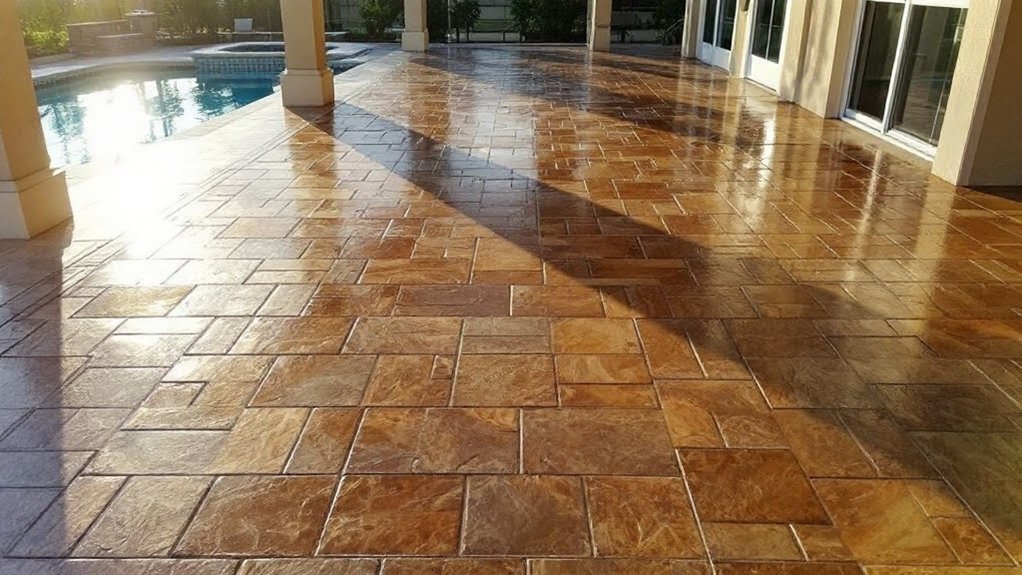
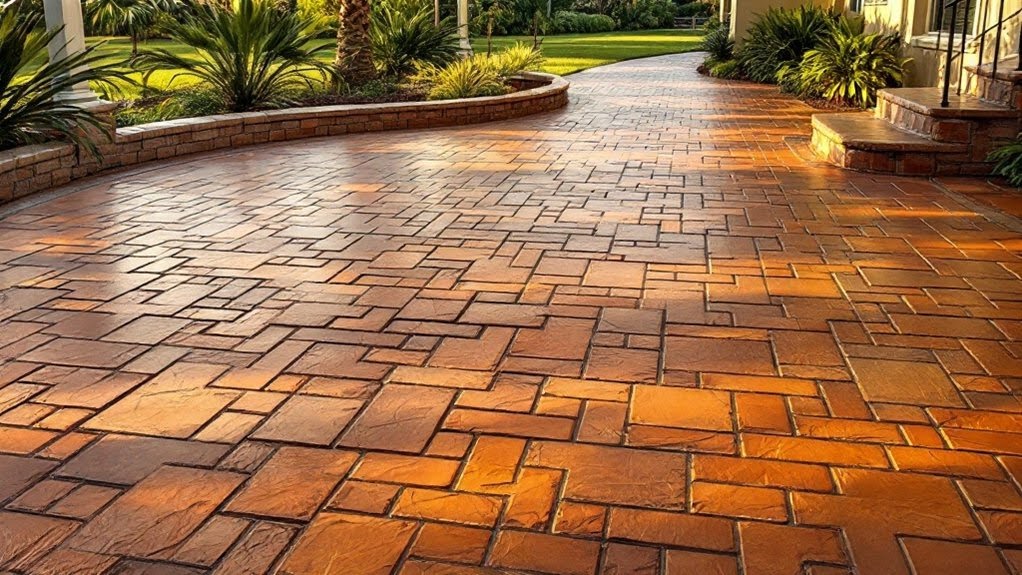
Recent Stamped Concrete Projects in Jacksonville
4.6 out of 5 — 41 Google Reviews
“The quality of the workmanship really stands out: the concrete surface is smooth, level, and beautifully finished, with attention to detail around edges, drainage, and expansion joints. The stamped design and coloring look high-end and have already drawn compliments from neighbors, while still feeling durable enough to handle Florida weather.”
“Roy and the crew took care of everything needed for our driveway pour and replacement. The stamped pattern looks great and was one of the main reasons we hired them after seeing our neighbor's driveway and patio. Highly recommended.”
“Would definitely recommend this company to anyone with concrete needs. They are professional. Website is clear and direct for quotes!”
Why stamped concrete costs more than a plain pour
The structural work underneath a stamped concrete slab is identical to any other pour: same sub-base excavation, same compaction, same rebar, same 4,000 PSI mix. What adds cost is the narrow working window on the surface and the number of steps that must happen in sequence before the concrete sets.
In Jacksonville's subtropical heat, a stamped concrete crew is racing a clock from the moment the truck arrives. High ambient temperatures and direct sun accelerate the set time significantly. On a 90-degree day with direct exposure, the window between initial set and final hardening can be 30 to 45 minutes shorter than in cooler climates. That means more labor on-site, tighter coordination, and no room for error.
Here is what happens in that compressed window, and why each step requires an experienced crew:
Dry-shake color hardener is broadcast across the fresh slab surface and floated into the concrete. Timing matters: too early and it sinks unevenly; too late and it does not bond. A second broadcast coat is standard for depth of color. In Florida heat, the troweling stage comes faster than it would in the Northeast or Midwest.
Antiquing release agent is broadcast or sprayed over the color hardener. The release serves two functions: it prevents the stamp mats from sticking to the concrete, and it deposits a contrasting accent color into the recessed areas of the pattern, creating the two-tone depth that makes stamped concrete look like real stone. The release color is typically a complement or contrast to the base color hardener.
The crew must begin pressing the stamp mats when the concrete is firm enough to hold an impression but soft enough to compress cleanly. This window is typically 20 to 45 minutes and varies by slab thickness, mix water content, and that day's temperature and humidity. Stamping too early produces blurred patterns; too late and the mats leave torn surfaces. The entire crew works together from one edge across the slab, with no stopping.
After the slab hardens overnight, the excess release agent is washed off. This is the stage where the pattern clarity and two-tone color depth become visible for the first time. Washing too aggressively removes too much accent; too gently leaves the surface dirty and obscures the pattern detail.
The sealer is the single most critical decision for Florida's climate. The wrong sealer will fail within one to two years. More on this in the sealing section below.
Stamped concrete patterns
These are the patterns we install most often in Northeast Florida. All are available with single or dual-color systems.
Ashlar Slate
Rectangular stone blocks in a running or stacked bond pattern. Grout lines create defined edges between the "stones." The most popular pattern for driveways and large patio areas in Jacksonville. Reads as premium stone at a fraction of the installation cost.
English Cobblestone
Small rounded cobble units in a random or fan pattern. Strong texture and distinct shadow lines. Often selected for circular driveways or accented border sections around a plain field. Works well in warmer tan, sand, and brown color palettes common in Florida landscaping.
Seamless Stone
Random texture without defined grout lines. The stamp presses a natural stone surface texture into the concrete without creating individual "units." Subtle, organic, low-maintenance visual. Ideal when you want the texture of stone without a strong geometric pattern competing with surrounding landscape design.
Wood Plank
Long parallel plank impressions with wood-grain texture. Used increasingly for covered lanai areas, interior-to-exterior transitions, and covered patios where the visual warmth of wood is desired without the maintenance reality of real wood in Florida's humidity. Color range includes natural cedar, driftwood gray, and dark mahogany tones.
Flagstone
Irregular irregular-edged stone slabs with defined "mortar" joints between them. Each unit is a different shape, mimicking natural-cut flagstone. More complex to stamp cleanly than repeating patterns because the crew must align irregular shapes consistently across the full pour area. Results in a highly organic, traditional look popular in formal landscape settings.
Brick
Running bond or herringbone brick pattern. The most recognizable and often the most requested pattern in Jacksonville's older neighborhoods. Brick stamped concrete gives the look of a traditional clay-brick driveway without the settling, weed growth in joints, or displacement issues of a dry-laid brick surface. Color range runs from classic red-brown to sand and gray-tone blends.
How the color system works
Stamped concrete color comes from two separate products applied at different stages, and the combination of the two is what creates the visual depth that separates good stamped work from flat, cheap-looking results.
Color Hardener (base)
A pigmented powder floated into the surface of the fresh concrete. It does two things: adds color and increases the surface density by raising the cement-to-aggregate ratio at the top layer of the slab. The result is a harder, more abrasion-resistant surface than plain concrete and a uniform base color across the entire pour.
Available in 50+ colors including natural stone tones, terra cotta, gray, tan, and charcoal ranges.
Antiquing Release (accent)
A powder or liquid applied over the color hardener immediately before stamping. The release settles into the low points of the stamp impression, depositing a darker or contrasting color into the "grout lines" and recessed texture of the pattern while leaving the raised areas the base color.
This two-tone effect is what makes a flagstone pattern look like individual stones with shadowed joints rather than flat colored concrete.
Penetrating vs topical sealer: why it matters in Florida
This is the decision that separates Jacksonville concrete contractors who know Florida's climate from those who do not. There are two categories of concrete sealers:
Sits on the surface as a film. Makes colors pop visually and is popular in showrooms for this reason. In Florida's humidity and UV, topical sealers trap moisture between the sealer film and the concrete. When temperatures cycle, that moisture expands and the sealer turns milky white. This is called blushing, and it is difficult to reverse. Topical sealers typically need replacement every 1 to 2 years in Florida.
Absorbs into the concrete surface and does not form a surface film. Moisture can still pass through the concrete naturally. No blushing, no peeling, no film to fail. Does not change surface gloss. Lifespan of 5 to 8 years per application. Our standard specification for all exterior Jacksonville stamped concrete.
There are situations where a low-solids acrylic topical sealer is appropriate on covered outdoor areas that see limited UV and humidity. We specify this when it fits the project. For exposed driveways, pool decks, and uncovered patios, we use penetrating sealers.
Sealing and maintenance in Florida
Stamped concrete in Jacksonville requires resealing every 2 to 3 years for surfaces with regular UV exposure. This timeline is shorter than the 3 to 5 year recommendation you will see on national contractor websites, which are written for milder climates. Northeast Florida's combination of year-round direct sun, high UV index, and 55+ inches of annual rainfall accelerates sealer breakdown faster than most of the country.
Signs it is time to reseal
- Water no longer beads on the surface and absorbs immediately instead
- Color looks noticeably lighter or more washed out than it did when new
- Surface feels rough or slightly porous when you run your hand across it
- Fine surface dusting occurs during dry periods
- Pattern lines appear less defined or filled with debris that will not wash out
What happens if you skip resealing
Stamped concrete without a functional sealer in Florida degrades faster than plain concrete because the color hardener at the surface is denser but not as deep as integral concrete color. UV attacks the surface pigment directly. Over 5 to 10 years of neglected sealing, the color hardener layer wears through in high-traffic areas (like tire tracks on a driveway) and begins to show as gray patches of exposed aggregate. This is a maintenance issue, not a structural failure, but it is expensive to correct because color patching stamped concrete is difficult to match.
The structural longevity of the slab is not affected by sealer condition. A stamped slab on a proper sub-base will remain structurally sound for 25 to 30 years regardless. The sealing maintenance is about preserving the appearance and color system.
Stamped concrete cost in Jacksonville
Installed price, including sub-base, pour, color hardener, release agent, stamp, and penetrating sealer.
Stamped concrete questions
Does stamped concrete crack?
How long does stamped concrete last in Florida heat?
Can you repair color fade in stamped concrete?
Is stamped concrete slippery when wet?
Related services and resources
Get a Stamped Concrete Quote
Written fixed-price quote. Tell us the size, pattern ideas, and location and we will get back to you with a firm number.
Stamped concrete specifications
A decorative surface is only as good as the slab under it. This is our standard stamped build.
Specifications reflect our standard residential practice and adjust to your site conditions, local soil, and Florida Building Code. The exact mix design and reinforcement are confirmed in your written quote.
Why the Right Concrete Contractor Matters in Jacksonville
The cheapest quote is rarely the cheapest job. Here is how a licensed, in-house crew compares to the day-crews and unlicensed pours common across Duval County.
The Seamless Standard
Every driveway, patio, and slab we pour is built on a properly compacted sub-base, jointed to control cracking, and mixed to Florida Building Code. If our workmanship fails structurally, we come back and make it right, in writing, on every project.
Serving All of Jacksonville and Duval County
From the Beaches to the Westside, Northside to Mandarin. Plus Nassau, St. Johns, and Clay counties.
Ready to talk about your project?
We install stamped concrete across Jacksonville and Duval County. Written, fixed-price quote. In-house crew, not subcontracted. FL CBC1269043.