Concrete Pavers in Jacksonville, FL
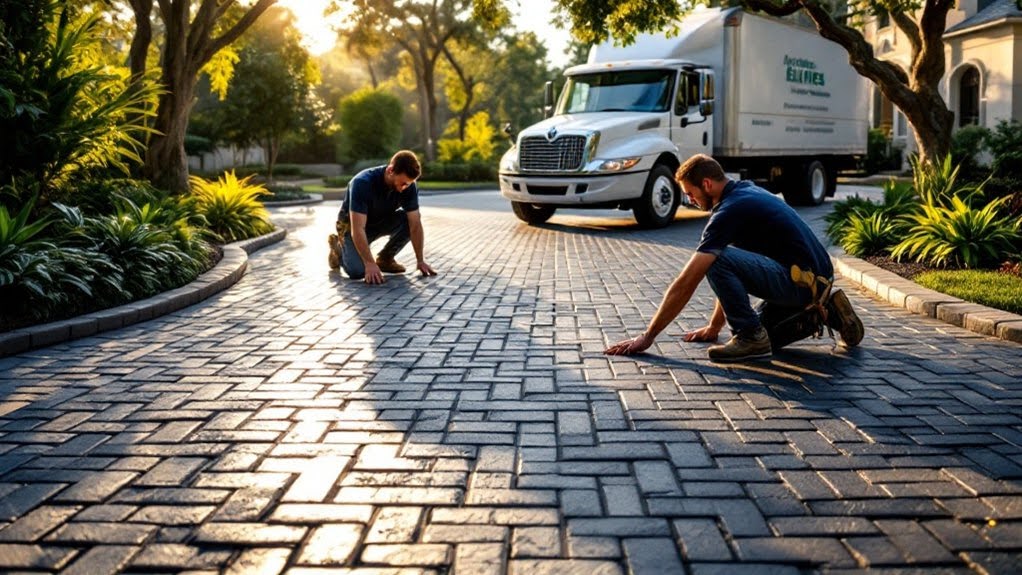
Precast concrete pavers installed on a proper limerock base with polymeric sand joints. Not natural stone, not poured concrete -- manufactured paving units that replace individually when one shifts or cracks. FL Certified Building Contractor CBC1269043.
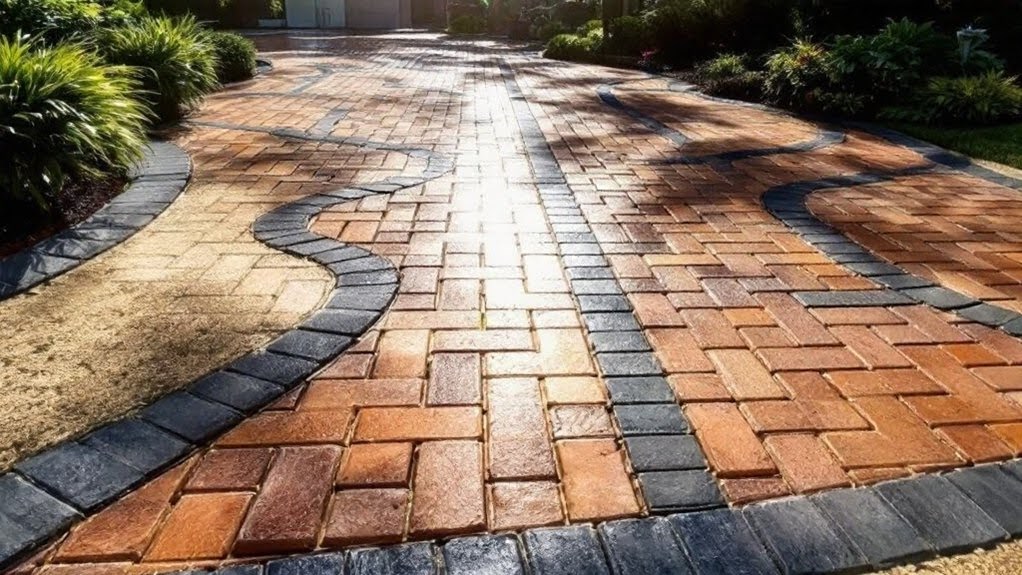
Recent Paver Projects in Jacksonville
4.6 out of 5 — 41 Google Reviews
“The quality of the workmanship really stands out: the concrete surface is smooth, level, and beautifully finished, with attention to detail around edges, drainage, and expansion joints. The stamped design and coloring look high-end and have already drawn compliments from neighbors, while still feeling durable enough to handle Florida weather.”
“Roy and the crew took care of everything needed for our driveway pour and replacement. The stamped pattern looks great and was one of the main reasons we hired them after seeing our neighbor's driveway and patio. Highly recommended.”
“Would definitely recommend this company to anyone with concrete needs. They are professional. Website is clear and direct for quotes!”
What "concrete pavers" actually means
The paver category has three distinct products and they are not interchangeable. Concrete pavers are factory-manufactured precast units -- blocks produced in controlled conditions and installed on a prepared base. They are not natural flagstone, travertine, or bluestone (those are stone pavers, quarried from the earth, and cost significantly more). They are also not poured concrete, which is a continuous slab cast in place (see our driveways page for that).
Concrete pavers are the most common paver choice in Jacksonville for three practical reasons: price, availability, and replaceability. Brands like Belgard, Unilock, and Pavestone manufacture consistent units available through local distributors, in dozens of profiles and colors. When one unit cracks or shifts -- which happens over a 25-year lifespan -- you pull that unit and replace it. You cannot do that with a continuous poured slab.
If you are comparing options, the short version: concrete pavers sit above poured concrete on first cost, below natural stone. The value proposition is in long-term repairability and drainage options. We will walk you through which makes sense for your project when you call.
Why people choose pavers over poured concrete
Four reasons concrete pavers outperform a poured slab in specific situations.
Individual unit replacement
When a single paver cracks, settles, or stains, you pull that unit and replace it. A damaged poured slab requires saw-cutting, demo, and a patch that never color-matches perfectly. Over a 25-30 year lifespan, this difference adds up.
Permeable drainage options
Permeable concrete pavers allow rainwater to drain through the joints into a stone reservoir base below. Jacksonville receives 50 or more inches of rain annually. Permeable pavers reduce surface runoff, reduce standing water, and can help with stormwater compliance on some lots. Poured concrete is impermeable by design.
No cure wait after installation
Poured concrete requires 7 days minimum before foot traffic and 28 days before vehicle loads. Concrete pavers are walkable as soon as installation and joint sand compaction are complete -- typically the same day the crew finishes. Useful on high-traffic areas where any downtime is a problem.
Tree root flexibility
Tree roots lift and heave both pavers and poured slabs. The difference: heaved pavers are reset individually after addressing the root. Heaved poured concrete remains cracked and is a larger structural repair. In Jacksonville neighborhoods with mature oaks and sweetgums, this matters.
What proper paver installation actually includes
The paver itself is the visible finish. What determines whether it stays flat and stable for 25 years is everything below it. We do not place pavers on dirt or skip base steps to lower a bid number.
We excavate to the depth required by intended use: typically 8 to 10 inches below finished grade for driveways (accommodating base + bedding sand + paver thickness), 6 to 8 inches for pedestrian areas. Subgrade is compacted with a plate compactor to reduce future settling.
Florida paver contractors use compacted limerock base (Florida DOT-specification limerock) rather than crushed stone common in northern states. We lay 4 to 6 inches of limerock depending on the application, compacted in lifts to a minimum 98% Proctor density. This base is where most cheap installs cut corners.
One inch of washed concrete sand (ASTM C33 specification) screeded to a uniform plane. ICPI (Interlocking Concrete Pavement Institute) standards require this layer for proper load transfer and minor surface leveling. We use 1-inch screed pipes to guarantee uniform depth across the field.
Pavers are placed by hand to the specified pattern. Cuts made with a wet saw or plate splitter at edges. A plate compactor with a rubber pad is run over the completed field to embed pavers into the bedding layer and lock interlock.
Rigid plastic edging is spiked into the limerock base every 12 inches along all unsupported edges. Without mechanical edge restraint, pavers migrate outward over time under load. Edge restraints are often omitted by low-bid contractors and are a primary cause of paver spreading within 3 to 5 years.
Polymeric sand swept into joints and compacted. A fine water mist activates the polymer binders, hardening the sand between units. This reduces weed germination, ant colonization, and paver migration. Standard play sand or mason sand in joints is a shortcut that degrades within 2 years. We use polymeric sand on every job.
Paver pattern options
Pattern affects both aesthetics and structural performance. Not all patterns are equal for driveways under vehicle load.
Running Bond
Rows of pavers offset by half a unit, like standard brick. The most widely used residential pattern. Clean, linear, reads as orderly. Suitable for pedestrian areas and lighter driveways. Easy for future repairs.
Herringbone
Units laid at 45 or 90 degrees in a zigzag pattern. ICPI recommends herringbone as the standard pattern for driveways under vehicle loads because the interlocking angle distributes force horizontally, reducing the chance of pavers migrating or rocking under tire stress. We default to herringbone on all vehicle-traffic areas.
Basket Weave
Pairs of pavers laid perpendicular, alternating horizontally and vertically to form a woven appearance. Traditional and widely recognized. Works well for patios, walkways, and decorative borders. Not the first choice for driveways under heavy vehicle traffic.
Stacked Bond
Units aligned in a straight grid. Modern, geometric appearance. Because all joints run straight through in both directions, there is no interlocking -- units have no horizontal friction against one another. Not suitable for driveways or any area that sees vehicle loads. Good for patios or pool surrounds with a contemporary design.
Random / Ashlar
Multiple paver sizes mixed in a random pattern that mimics quarried flagstone without the stone price. Requires careful planning to avoid straight joint runs that compromise interlock. Works well on patios where the goal is a natural, informal appearance.
Sealing concrete pavers in Jacksonville
Sealing concrete pavers is optional but makes practical sense in Florida. Jacksonville's high humidity, 50-plus inches of annual rainfall, salt air proximity for coastal installations, and intense UV create conditions that accelerate efflorescence and surface color fade on unsealed pavers.
Efflorescence is the white salt bloom that appears on the surface of concrete pavers when mineral salts migrate through the unit with moisture. It is a normal occurrence in Florida's humidity, not a defect, and it does not affect structural integrity. However, it is unsightly. Penetrating sealer slows the process significantly by reducing moisture ingress.
Oil, leaf tannins, and fertilizer stains penetrate unsealed concrete pavers. A penetrating sealer reduces absorption without altering surface appearance.
Wet-look or gloss sealers enhance the natural color of pavers. Penetrating sealers maintain the natural matte finish. Both reduce UV-driven fading over time.
Sealer applied over polymeric sand further hardens joint material. Reduces weed seed germination and ant excavation in joints beyond what polymeric sand alone provides.
We use penetrating sealer as the standard for pavers. Sealing should be done at 30 days after installation, after the polymeric sand has fully cured. We recommend resealing every 3 to 5 years depending on sun exposure and traffic.
What concrete pavers cost in Jacksonville
We give you a written fixed price. Here is the range and what drives it.
- Paver manufacturer and profile (standard rectangular vs. multi-piece or large-format units)
- Pattern complexity (herringbone at 45 degrees generates more cuts than running bond)
- Demo and removal of existing concrete or asphalt
- Base depth required (pedestrian vs. vehicle traffic vs. heavy vehicle)
- Edge restraint complexity (straight runs vs. curved borders)
- Drainage requirements and slope corrections
Pavers vs. stamped concrete
Both options can produce a decorative surface. The fundamental difference is structure: concrete pavers are individual units that replace independently; stamped concrete is a continuous poured slab with a decorative finish applied during the pour. When a stamped concrete slab develops a crack, the crack is structural -- the surface pattern is broken and the repair is visible. When a concrete paver cracks, you replace that unit.
Stamped concrete has a lower first cost for the same square footage. Pavers have higher first cost but a repair cost that is limited to the affected unit rather than a section of slab. Florida's UV also requires sealer maintenance on stamped concrete every 2 to 3 years to prevent surface crazing; pavers can go 3 to 5 years between sealing intervals.
For a full side-by-side breakdown of costs, maintenance cycles, crack behavior, and suitable applications, see our detailed comparison: Stamped Concrete vs. Pavers in Jacksonville.
Concrete paver questions
Do pavers or stamped concrete last longer?
Can pavers be installed over an existing concrete slab?
Do pavers shift in Jacksonville's sandy soil?
What is polymeric sand and why does it matter?
Do you carry a warranty on paver installation?
Related services and resources
Get a written quote for concrete pavers
Fixed price in writing. In-house crew. FL CBC1269043 since 2013.
Why the Right Concrete Contractor Matters in Jacksonville
The cheapest quote is rarely the cheapest job. Here is how a licensed, in-house crew compares to the day-crews and unlicensed pours common across Duval County.
The Seamless Standard
Every driveway, patio, and slab we pour is built on a properly compacted sub-base, jointed to control cracking, and mixed to Florida Building Code. If our workmanship fails structurally, we come back and make it right, in writing, on every project.
Serving All of Jacksonville and Duval County
From the Beaches to the Westside, Northside to Mandarin. Plus Nassau, St. Johns, and Clay counties.
Ready to get a concrete paver quote in Jacksonville?
Written, fixed-price quote. Proper limerock base, polymeric sand, mechanical edge restraints -- the way it is supposed to be installed. FL CBC1269043 since 2013.